
What is new: D365 Commerce CSU

Introduction
There are no official Microsoft Release Notes on the latest D365 Commerce (Retail) Cloud Scale Unit (CSU) APIs. Since more and more companies are starting to use these APIs for integrating external e-commerce websites with D365 ERP, I think the community may appreciate some ‘unofficial’ Commerce CSU “WHAT’S NEW” 😎.
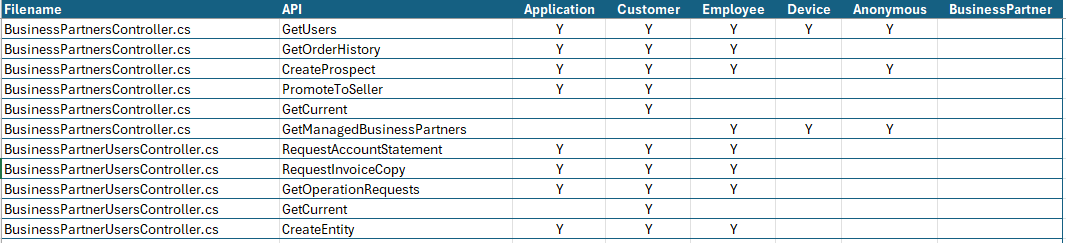
Besides that, the ‘official’ list of APIs is not really kept up-to-date here on Microsoft learn, so below you’ll find links to the latest API documentation, an up-to-date list of all APIs and what role they’re designed for (Customer = website, Employee/Device = store, Application = server-to-server).
Release notes | Latest version
The latest Commerce CSU version which is used for the Release notes here is:
The version is compared with 9.49 (10.0.39).
Removed APIs
/Commerce/GetOrdersByStore
/Commerce/GetPickUpOrdersByStore
New APIs
Note on Roles vs Use:
- Anonymous/Customer/BusinessPartner = e-commerce
- Employee/Device = In-store
- Application = Server-to-Server
As per this list, it becomes clear that Microsoft is investing to expose Copilot/ERP backend generated summary information through the CSU. Unfortunately, this is currently only designed for use in-store (role = employee), but it should be possible to extend this.
Data Model changes
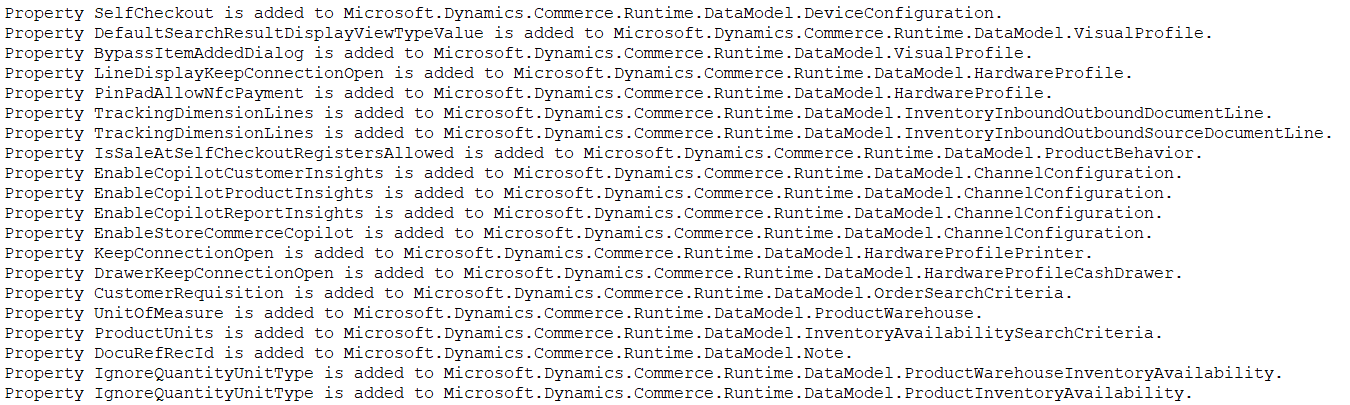
The list above demonstrates investment in the following areas:
- Self checkout POS (in-store): more detail
- Copilot Summaries: more detail
- New search criteria for stock availability
Relevant links
All Commerce APIs and roles (V9.50) in Excel: link
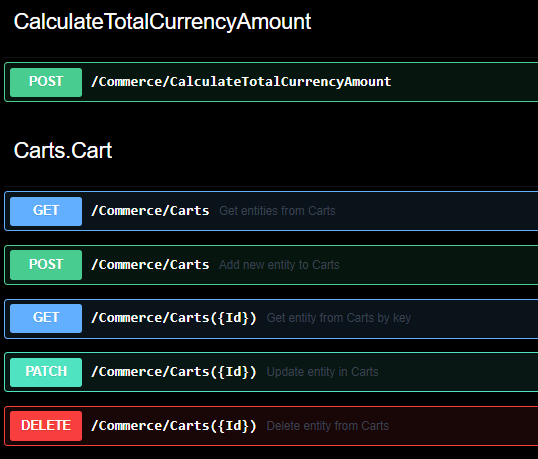
Full Commerce API documentation (V9.50): link
About the Author
I’ve been integrating non-Microsoft e-commerce solutions with D365 ERP and CRM since the early days of AX for Retail in 2009. Already back in 2015, I connected an E-commerce platform to D365 ERP by a predecessor of the current D365 Commerce CSU for the first time.
Get in touch via patrickmouwen.com/contact if you need help in implementing:
- D365 Commerce on top of ERP including D365 Store Commerce App and D365 e-commerce
- Customizing/Extending D365 Commerce, CSU, Store Commerce App and e-commerce
- B2C and B2B Headless Commerce/D365 ERP integrations via Commerce CSU
- B2C and B2B Commerce Platform/D365 ERP integrations via Commerce CSU
- Customer Service operation based on D365 ERP and D365 CE data utilizing Commerce CSU
- Social Commerce/D365 ERP integrations via Commerce CSU
- Professional App (React.JS)/D365 ERP integrations utilizing Commerce CSU
- POS/ERP integration
Contact me on LinkedIn for more details: https://www.linkedin.com/in/patrickmouwen/
Disclaimer
The content of this article represents my independent technical analysis and personal interpretation of publicly available software artefacts. It is not endorsed by, affiliated with, or authorised by Microsoft Corporation. Nothing in this article constitutes official Microsoft documentation, guidance, or product commitments.
All findings are derived from analysis of the software and public documentation. Feature descriptions, presumable use cases, and “likely intent” assessments reflect my professional opinion based on observable code and API changes — they may not reflect Microsoft’s actual design intent, planned behaviour, or final implementation.
Information regarding features described as preview, private preview, or roadmap items is subject to change at Microsoft’s sole discretion and should not be relied upon for planning, purchasing, or architectural decisions. This article describes the product as at the date of publication above.
This article is provided for informational and educational purposes only, on an “as-is” basis without warranties of any kind, express or implied. The author assumes no liability for any direct, indirect, incidental, or consequential damages arising from the use of or reliance on the information contained herein.
For authoritative product information, consult Microsoft’s official documentation at learn.microsoft.com.